

Organic Research
Follow a manual added link
Poulia KA, Bakaloudi DR, Alevizou M, et al. Impact of organic foods on chronic diseases and health perception: a systematic review of the evidence. Eur J Clin Nutr. 2025
Poulia KA, Bakaloudi DR, Alevizou M, Papakonstantinou E, Zampelas A, Chourdakis M.
This systematic review examined the health impacts of long-term organic food consumption in adults and found associations with lower cardiometabolic risk factors and reduced pesticide exposure.
Follow a manual added link
The effects of organic food on human health: a systematic review and meta-analysis of population-based studies. Nutr Rev. 2024
Jiang B, Pang J, Li J, Mi L, Ru D, Feng J, Li X, Zhao A, Cai L.
This systematic review evaluated associations between organic food consumption and human health outcomes. Organic food intake was consistently associated with lower pesticide exposure biomarkers, with some favourable associations reported for general health measures.
Follow a manual added link
Production, Composition and Nutritional Properties of Organic Milk: A Critical Review. Foods. 2024
Linehan K, Patangia DV, Ross RP, Stanton C.
This review examined the compositional characteristics of organic compared with conventional milk. Differences were identified in fatty acid profiles, including higher omega-3 content in organic milk, largely reflecting pasture-based feeding systems. While compositional variations were observed, evidence for clear clinical health advantages remains limited.
Follow a manual added link
Integrated Soil and Crop Management in Organic Agriculture: A Logical Framework to Ensure Food Quality and Human Health? Agronomy 2021, 11, 2494.
Rempelos, L. et al
In this article the evidence that organic farming methods improve the nutritional quality of food crops is reviewed. There is growing evidence that agricultural intensification has resulted in a reduction in the nutritional quality of food and the sustainability of food production, and organic farming practices not only improve food quality and human health, but also food security.
Follow a manual added link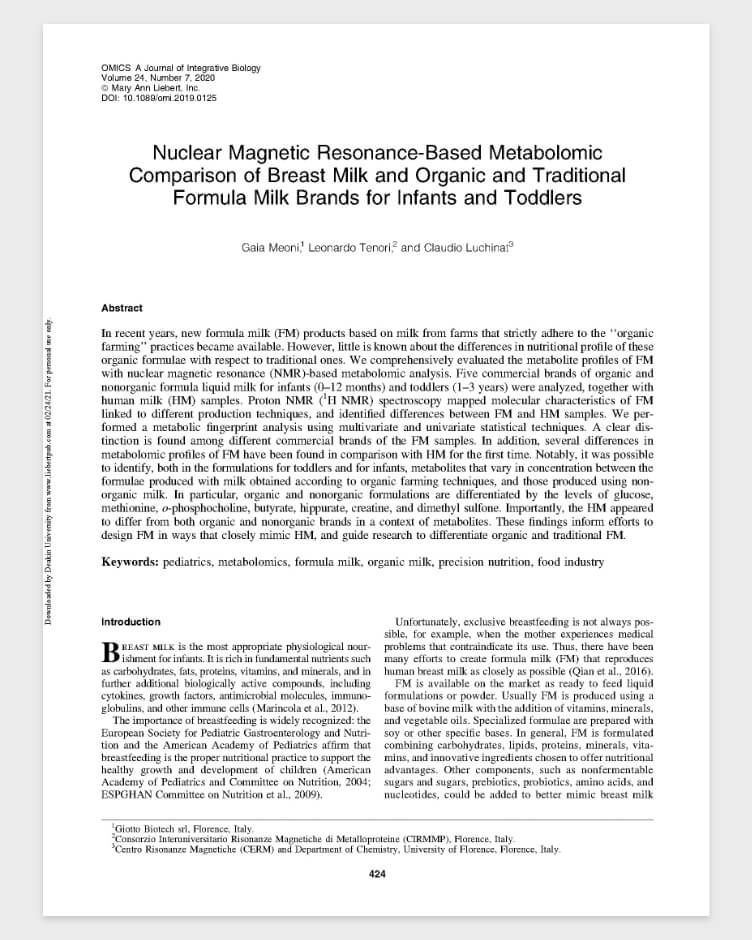
Nuclear magnetic resonance based metabolomic comparison of breast milk and organic and traditional formula brands for infants and toddlers. OMICS. 2020. J. Int. Biol 24.7. doi:10.1089/omi.2019.0125.
Meoni G, Tenori L, Luchinat C.
This study evaluated the metabolite profiles of formula milk with nuclear magnetic resonance-based metabolomic analysis. The findings inform efforts to design formula milk in ways that closely mimic human milk, and guide research to differentiate organic and traditional formula milk.
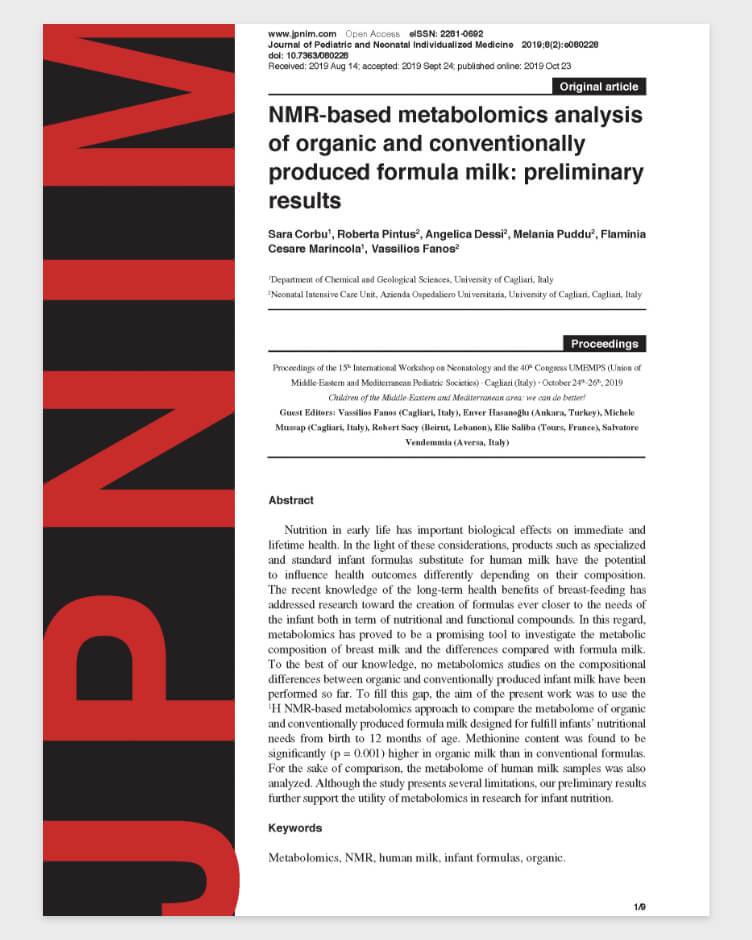
NMR-based metabolomics analysis of organic and conventionally produced formula milk: preliminary results. J. Pediatr. Neonat. Individual Med. 2019. 8 (2) e080228.
Corbu S, Pintus R, Dessi A, Pudda M, Marincola C, Fanos V.
This study aimed to present work to use a proton nuclear resonance-based metabolomics approach to compare the metabolome of organic and conventionally produced formula milk designed for fulfill infants’ nutritional needs from birth to 12 months of age. Although the study presents several limitations, our preliminary results further support the utility of metabolomics in research for infant nutrition.
Follow a manual added link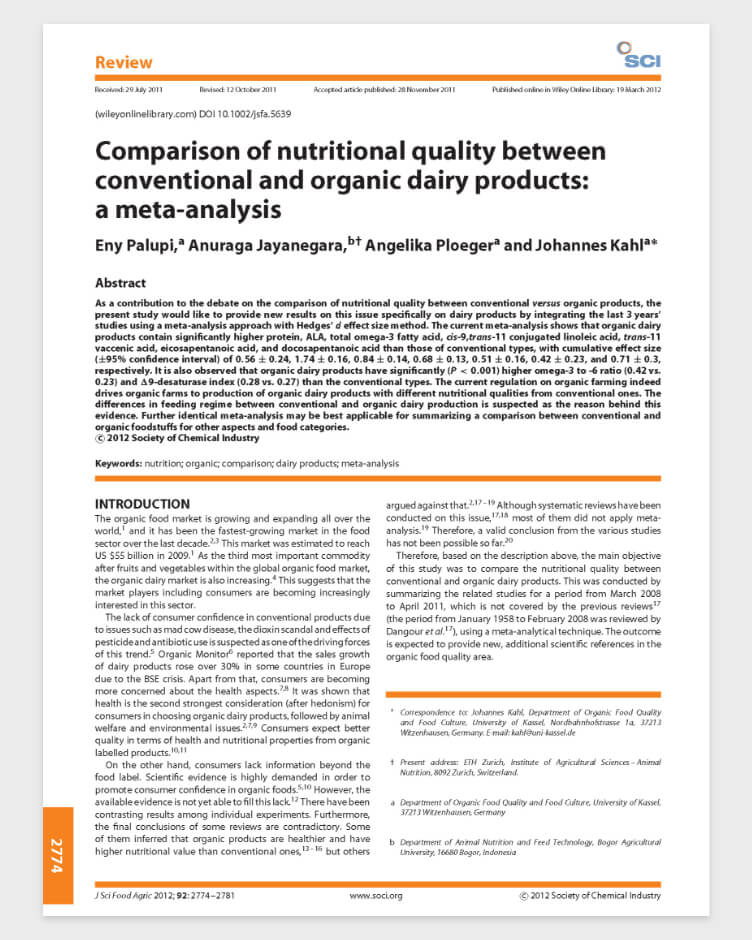
Comparison of nutritional quality between conventional and organic dairy products: a meta-analysis. J Sci Food Agric 2012. 92. 2774-2781.
Palupi E, Jayanegara A, Ploeger A, Kahl J.
This study looks at a contribution debate on the comparison of nutritional quality between conventional versus organic products using a meta-analysis approach. The differences in feeding regime between conventional and organic dairy productions is suspected to be the reason behind this evidence.
Follow a manual added link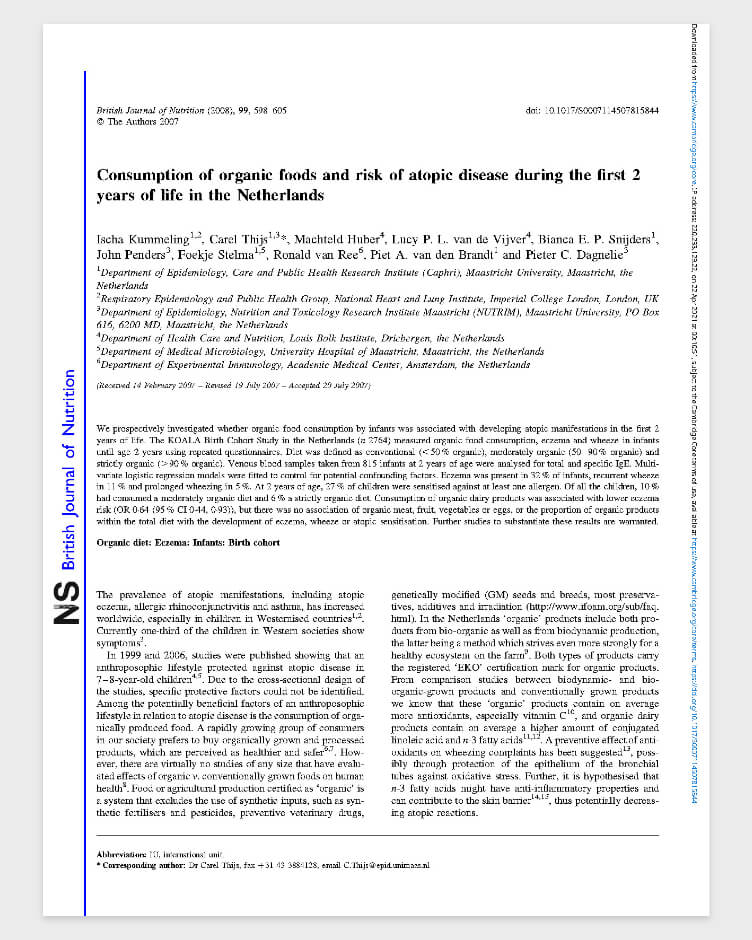
Consumption of organic foods and risk of atopic disease during the first 2 years of life in the Netherlands. Brit. J. Nutr.2008. 99. 598-605.
Kummeling I, Thijs C, Huber M, van de Vijver LPL, Snijders BEP, Penders J, Stelma F, van Ree R, van den Brandt PA, Dagnelie.
This study investigated whether organic food consumption by infants was associated with developing atopic manifestations. Consumption of organic dairy products was associated with lower eczema risk.
Follow a manual added link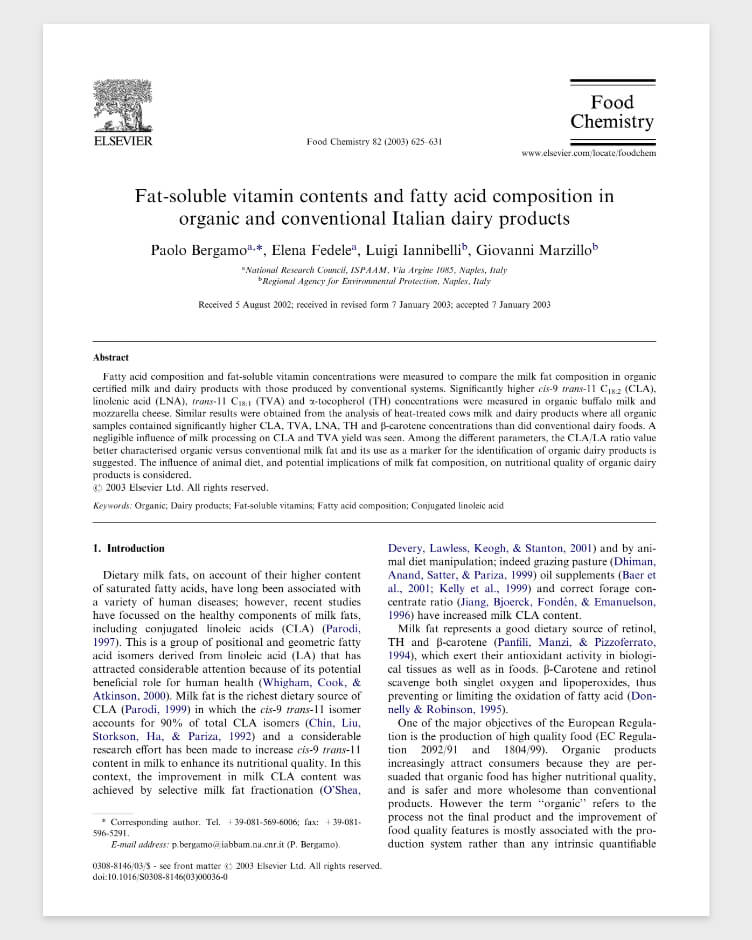
Fat Soluble vitamin contents and fatty acid composition in organic and conventional Italian dairy products. Food Chemistry. 2003. 82 635-631.
Bergamo P, Fedele E, Iannibelli L, Marzillo G
Fatty acid composition and fat-soluble vitamin concentrations were measured to compare the milk fat composition in organic certified milk and dairy products with those produced by conventional systems. The influence of animal diet, and potential implications of milk fat composition, on nutritional quality of organic dairy products is considered.