

Adverse Food Reactions
Allergy Management
Follow a manual added link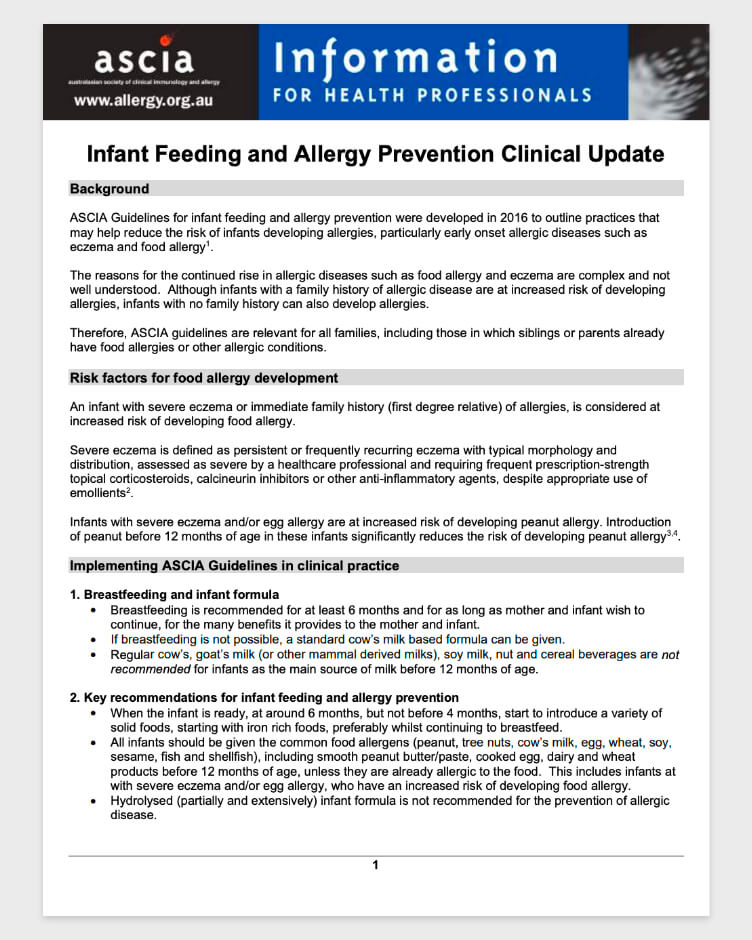
Infant Feeding and Allergy Prevention Clinical Update
Australian Society of Clinical Immunology and Allergy. Infant Feeding and Allergy Prevention [internet]. 2020 [cited Apr 2021]; ASCIA.
ASCIA Guidelines for infant feeding and allergy prevention outline practices that may help reduce the risk of infants developing allergies, particularly early onset allergic diseases such as eczema and food allergy.
Follow a manual added link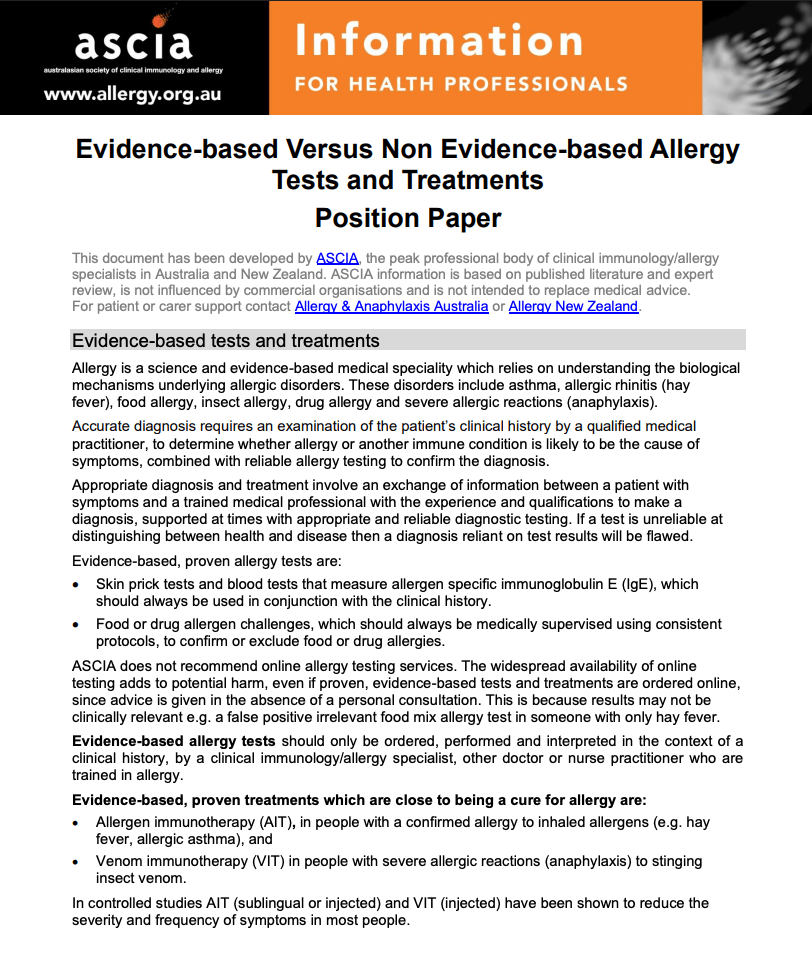
Position Paper: Evidence-Based Versus Non Evidence-Based Allergy Tests and Treatments
Australian Society of Clinical Immunology and Allergy. Position Paper: Evidence-Based Versus Non Evidence- Based Allergy Tests and Treatments [internet]. 2025 [cited Feb 2026]; ASCIA.
This position paper outlines current evidence-based versus non evidenced based allergy tests and treatments.
Follow a manual added link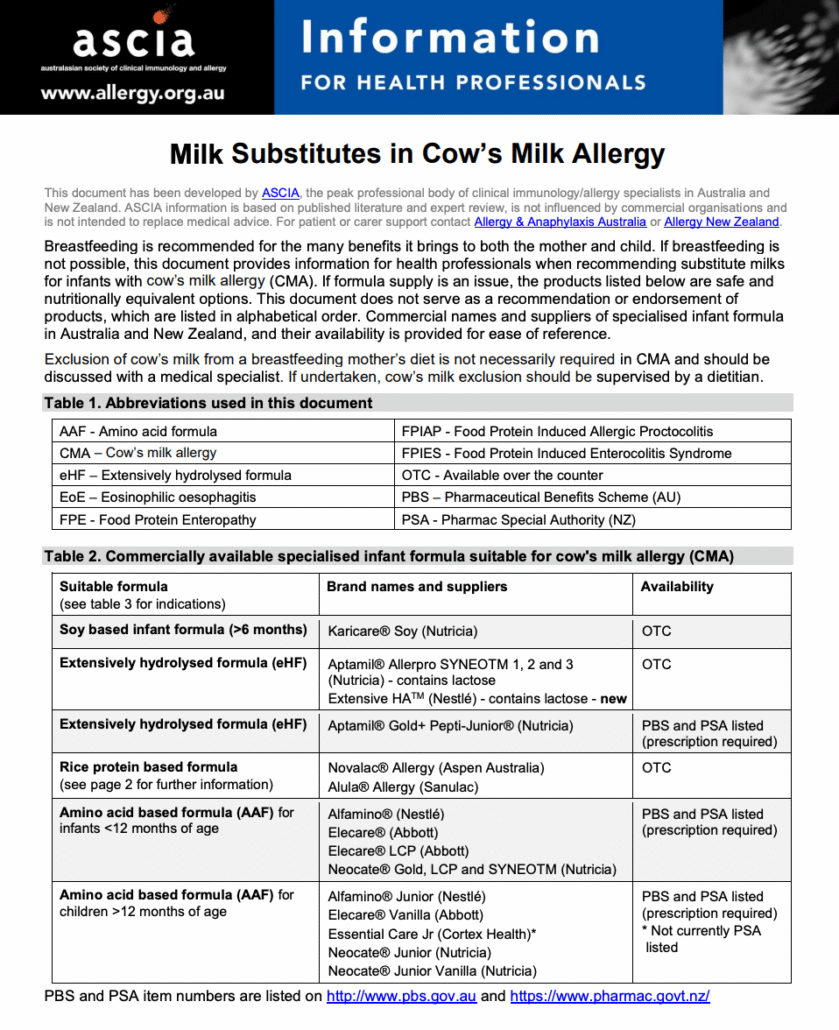
Milk Substitutes in Cow’s Milk Allergy
Australian Society of Clinical Immunology and Allergy. Milk Substitutes in Cow’s Milk Allergy[internet]. 2025 [cited Feb 2026]; ASCIA.
This document can assist health professionals in recommending substitute milks when an infant or child has cow’s milk allergy.
Follow a manual added link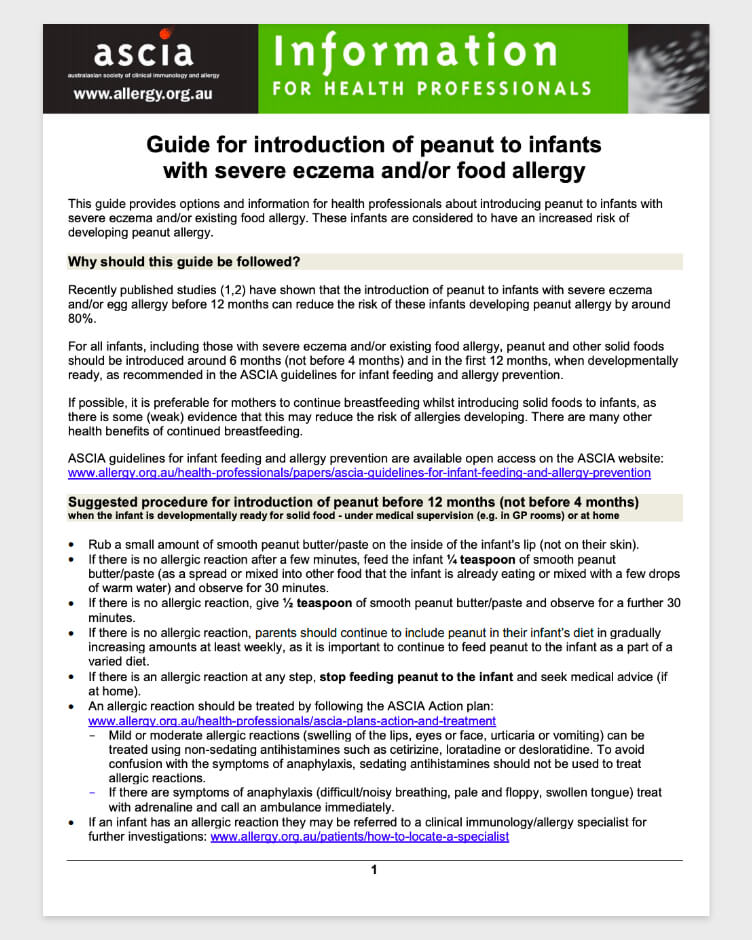
Guide for introduction of peanut to infants with severe eczema and/or food allergy
Australian Society of Clinical Immunology and Allergy. Guide for introduction of peanut to infants with severe eczema and/or food allergy [internet]. 2017 [cited Apr 2021]; ASCIA.
For all infants, including those with severe eczema and/or existing food allergy, peanut and other solid foods should be introduced around 6 months (not before 4 months) and in the first 12 months, when developmentally ready, as recommended in the ASCIA guidelines for infant feeding and allergy prevention.
Follow a manual added link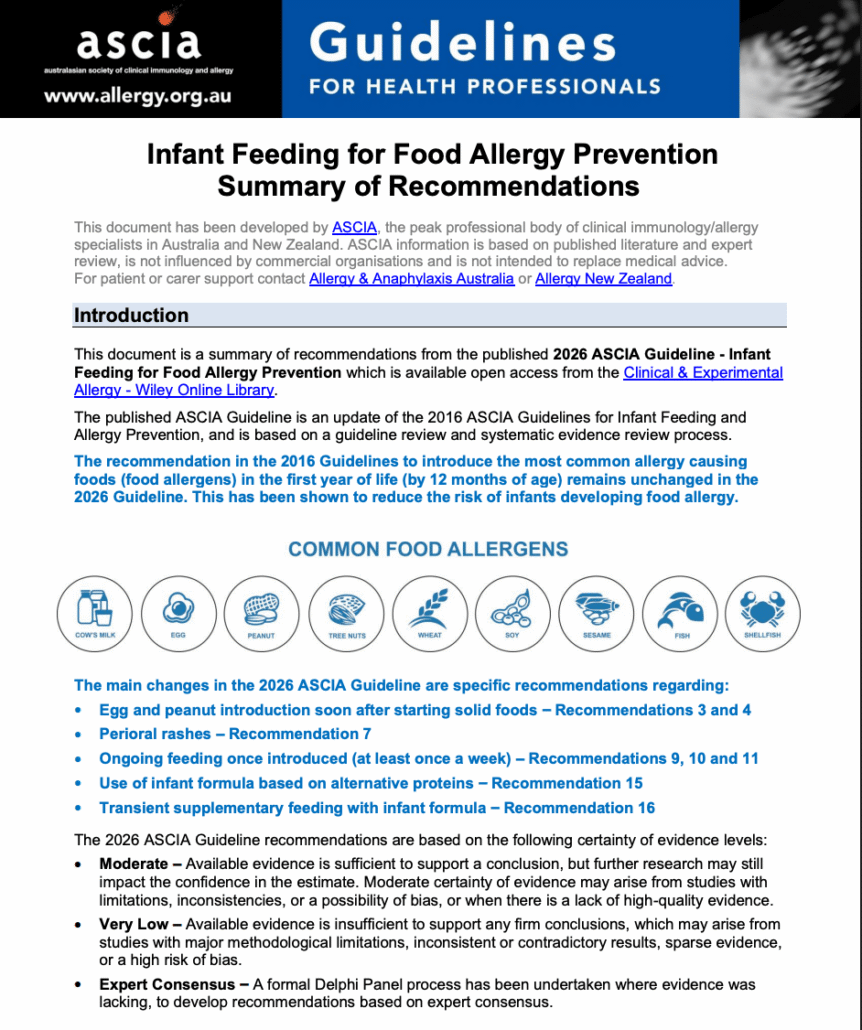
Infant Feeding for Food Allergy Prevention Summary of Recommendations
Australian Society of Clinical Immunology and Allergy. Infant Feeding for Food Allergy Prevention Summary of Recommendations [internet]. 2026 [cited Feb 2026]; ASCIA.
Follow a manual added link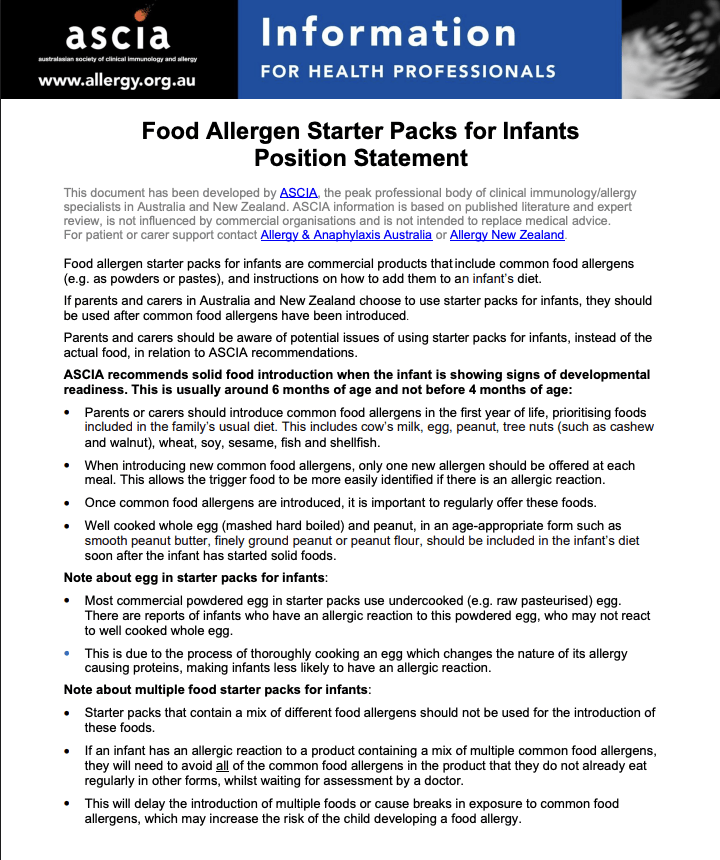
Food Allergen Starter Packs for Infants Position Statement
Australian Society of Clinical Immunology and Allergy. Food Allergen Starter Packs for Infants Position Statement [internet]. 2026 [cited Feb 2026]; ASCIA.
Follow a manual added link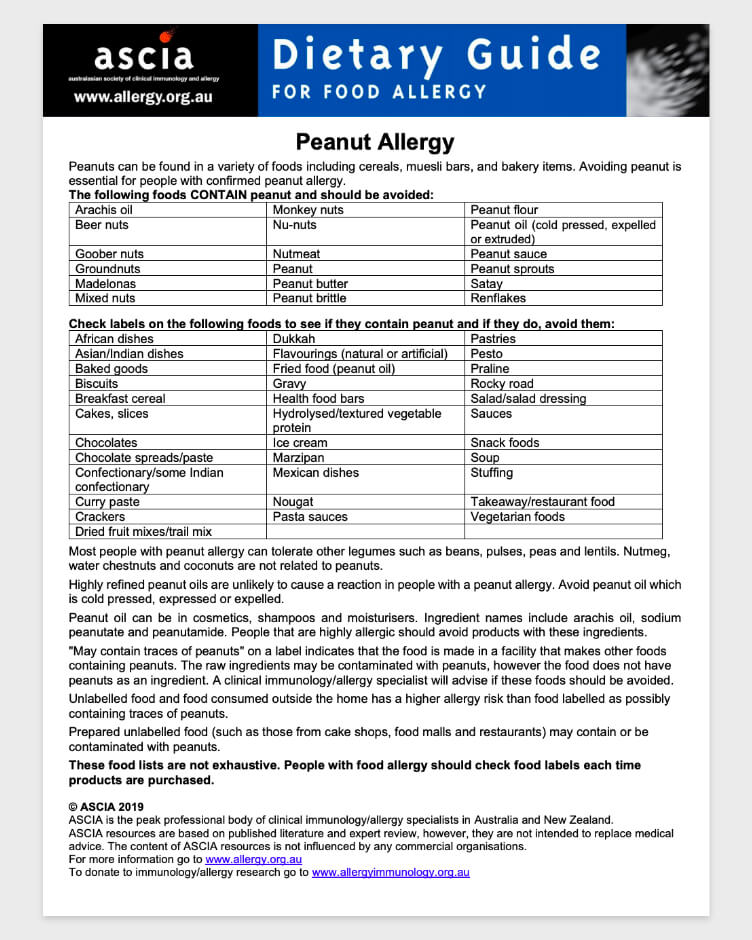
Peanut Allergy
Australian Society of Clinical Immunology and Allergy. Peanut Allergy [internet]. 2019 [cited Apr 2021]; ASCIA.
Avoiding peanut is essential for people with confirmed peanut allergy. “May contain traces of peanuts” on a label indicates that the food is made in a facility that makes other foods containing peanuts. Foods that contain peanuts and should be avoided included foods such as arachis oil, beer nuts and groundnuts.
Follow a manual added link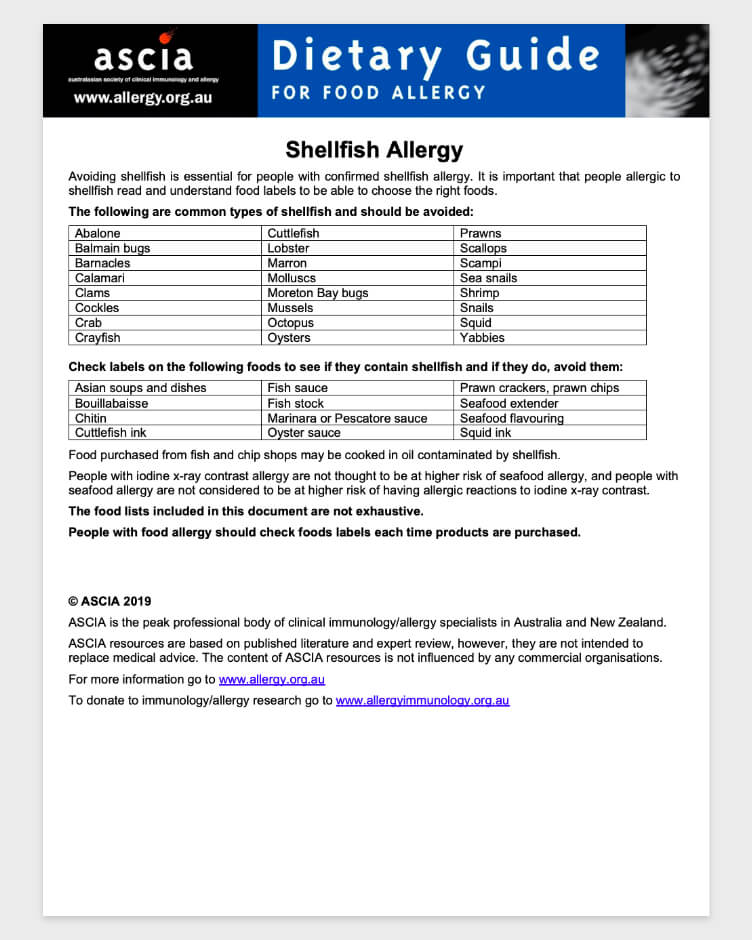
Shellfish Allergy
Australian Society of Clinical Immunology and Allergy. Shellfish Allergy [internet]. 2019 [cited Apr 2021]; ASCIA.
Common types of shellfish that should be avoided include: abalone, Balmain bugs, etc. Food purchased from fish and chip shops may be cooked in oil contaminated by shellfish.
Follow a manual added link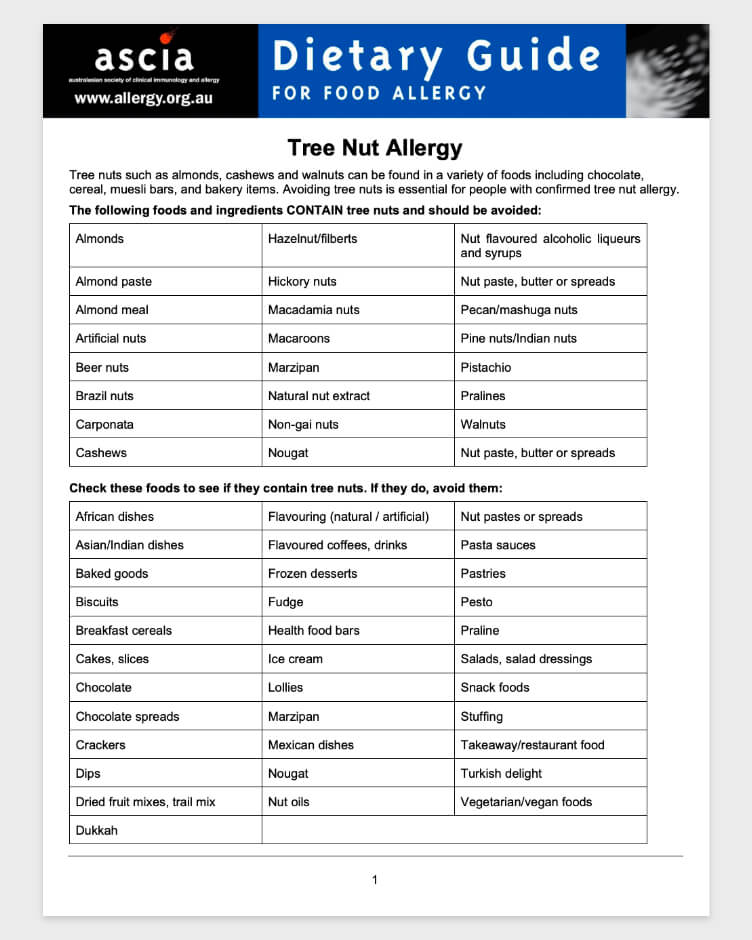
Tree Nut Allergy
Australian Society of Clinical Immunology and Allergy. Tree Nut Allergy [internet]. 2019 [cited Apr 2021]; ASCIA.
Tree nuts such as almonds, cashews and walnuts can be found in a variety of foods including chocolate, cereal, muesli bars, and bakery items. Unlabelled food or food consumed outside the home has a higher risk than food labelled as possibly containing traces.
Follow a manual added link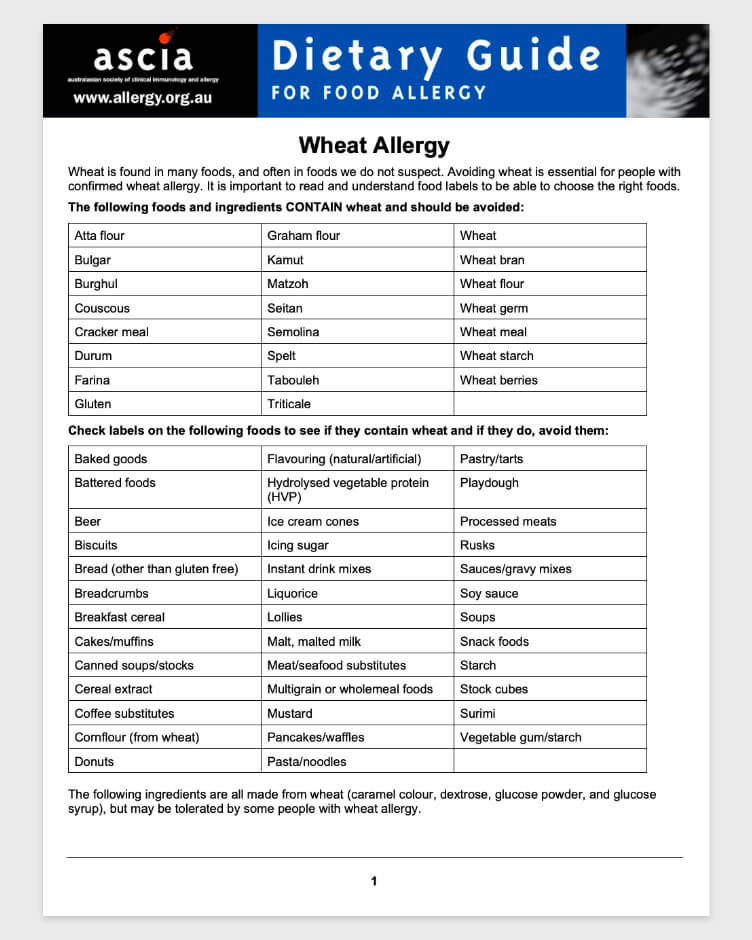
Wheat Allergy
Australian Society of Clinical Immunology and Allergy. Wheat Allergy [internet]. 2019 [cited Apr 2021]; ASCIA.
Gluten is one of many proteins in wheat, barley, oats and rye. Approximately 20% of people with wheat allergy may be allergic to other gluten containing cereals such as barley, rye or oats.
Follow a manual added link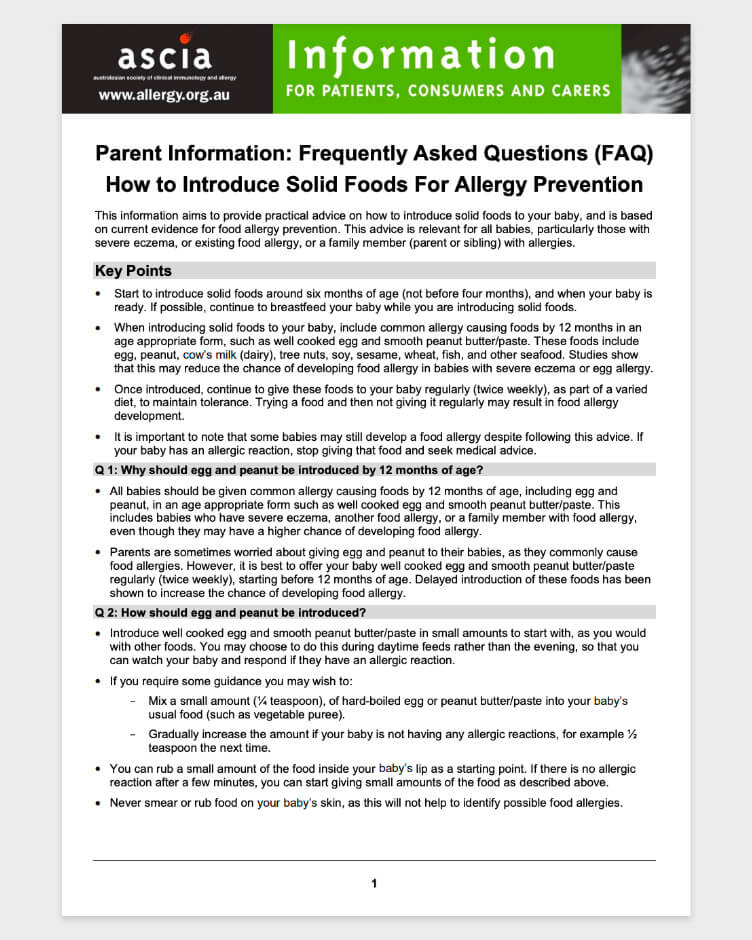
How to Introduce Solid Foods For Allergy Prevention FAQ
Australian Society of Clinical Immunology and Allergy. How to Introduce Solid Foods For Allergy Prevention FAQ [internet]. 2018 [cited Apr 2021]; ASCIA
This advice is relevant for all babies, particularly those with severe eczema, or existing food allergy, or a family member with allergies. All babies should be given common allergy causing foods by 12 months of age, including egg and peanut, in an age appropriate form such as well cooked egg and smooth peanut butter/paste.